 English
 Turkish
 05 MAYIS 2026


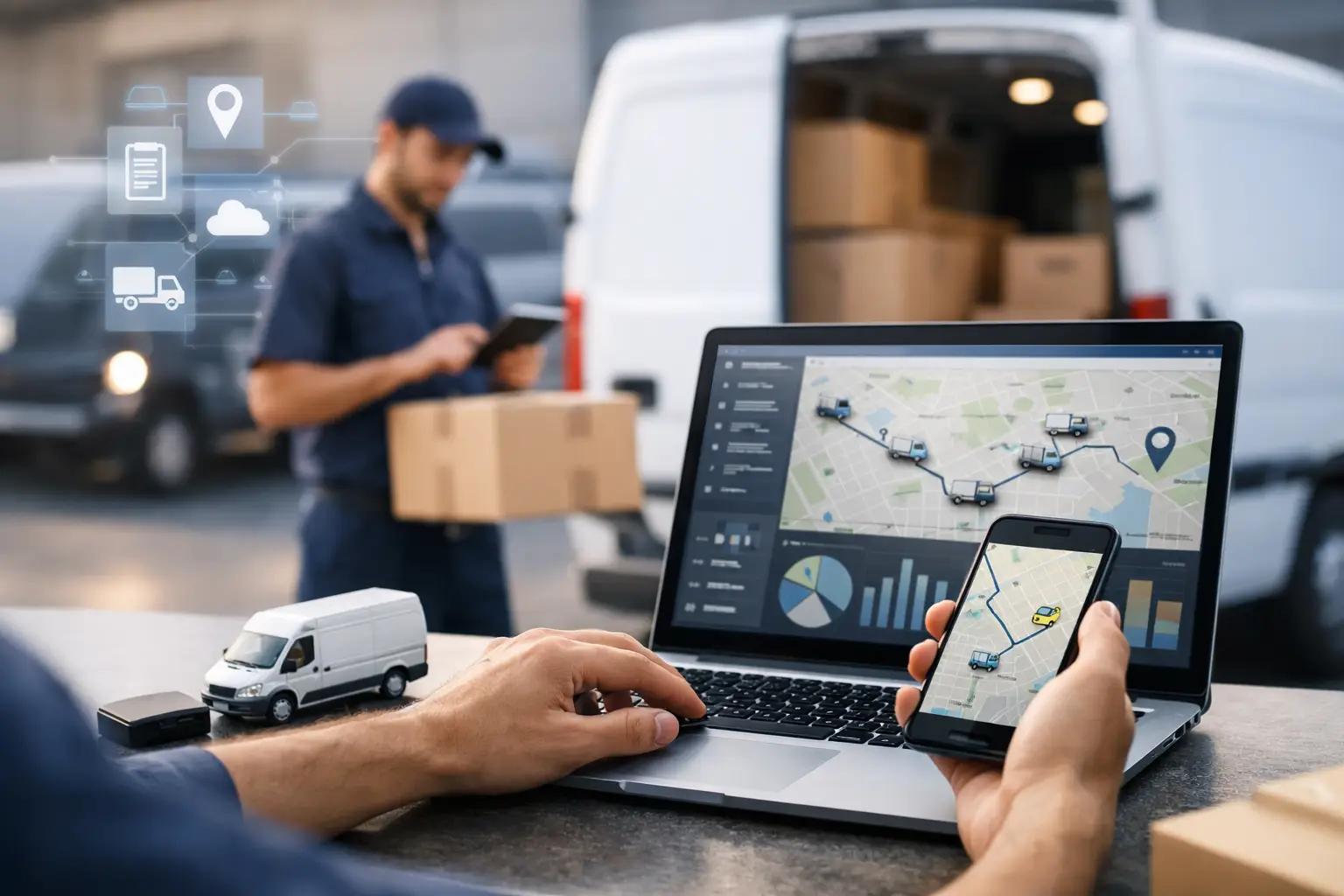
In a courier operation, problems often don't start in the field. They begin the moment an order enters the system – incorrect addresses, uneven workload distribution, broken communication, delayed status updates, and lagging reporting. Therefore, when considering the best tools for courier operations, it's necessary to evaluate not only field applications but also a structure that strengthens the end-to-end decision-making process.
The right toolset provides more than just faster delivery. It offers control to the operations team, visibility to the customer, and measurable performance to management. Especially in businesses managing multiple couriers, fragmented solutions might suffice in the short term; however, as scale increases, the cost of inefficiencies becomes higher than it appears.
Courier operations are the sum of interconnected decisions. When order assignment, route creation, proof of delivery, customer notification, and performance tracking run on separate systems, teams carry data but cannot manage the operation. The key issue here is not the number of vehicles, but that the vehicles work within the same operational flow.
For example, you might have a powerful route planning module. However, if the courier mobile application doesn't receive this plan in real time, the call center can't see the delivery status, and managers can't report the reasons for delays, route planning alone won't create the desired impact. The best results are achieved when complementary vehicles work together on a common data foundation.
The backbone of courier operations is task management. Regardless of the channel from which orders arrive, they need to be centrally collected, prioritized, and assigned to the appropriate courier. If orders received by phone, delivery requests from e-commerce panels, and corporate API flows are processed separately, the operations team spends time tracking rather than managing them.
A good task management system should consider variables such as delivery type, time window, region, vehicle type, and courier availability together. Manual assignment may still work in some small operations. However, as daily delivery volume increases, manual methods generate delays, errors, and unbalanced workloads. Automatic or semi-automatic assignment provides a significant advantage, especially for teams that deliver on the same day.
The key point here is that automation should not operate blindly. The system should offer suggestions and leave room for intervention for the operations manager when necessary. Because not every delivery can be solved mathematically; field-specific variables such as customer sensitivity, regional density, or courier experience come into play.
Route planning is one of the most important factors impacting the efficiency potential of most businesses. Simply queuing up addresses for couriers is not the same as truly optimizing routes. Traffic density, delivery time intervals, vehicle capacity, one-way applications, and the immediate impact of new orders must all be considered together.
This is why route planning solutions stand out among the best tools for courier operations. Proper planning helps achieve more deliveries with the same fleet, reduces fuel consumption, lowers the cost per delivery, and makes estimated arrival times more reliable for the customer.
However, the most complex route engine may not be the right choice for every business. If the operation is conducted in specific districts, with a fixed customer network and low variability, a simpler structure may suffice. In contrast, for rapidly growing, multi-region, or high-demand-fluctuation operations, dynamic planning becomes a necessity, not just a preference.
The most critical screen in the field isn't the control panel in the operations center, but the app in the courier's hand. Because no matter how good the plan, if the field application is slow, confusing, or incomplete, the process will falter. The courier's mobile application is the essential tool for accepting tasks, navigation guidance, delivery status updates, collecting proof of delivery, and communicating with the center.
A good mobile application should reduce, not increase, the courier's workload. Unnecessary screens, repeated data entry, and a system that doesn't work with weak connections create significant time loss in the field. In markets like Turkey, with high traffic density and delivery tempos, a difference of a few seconds in processing time translates into a huge difference in productivity at the end of the day.
Proof of delivery becomes critical here. The immediate processing of data such as signatures, photos, QR codes, or recipient information reduces customer complaints and strengthens internal controls. Especially in corporate delivery workflows, this data quality directly translates into an indicator of service quality.
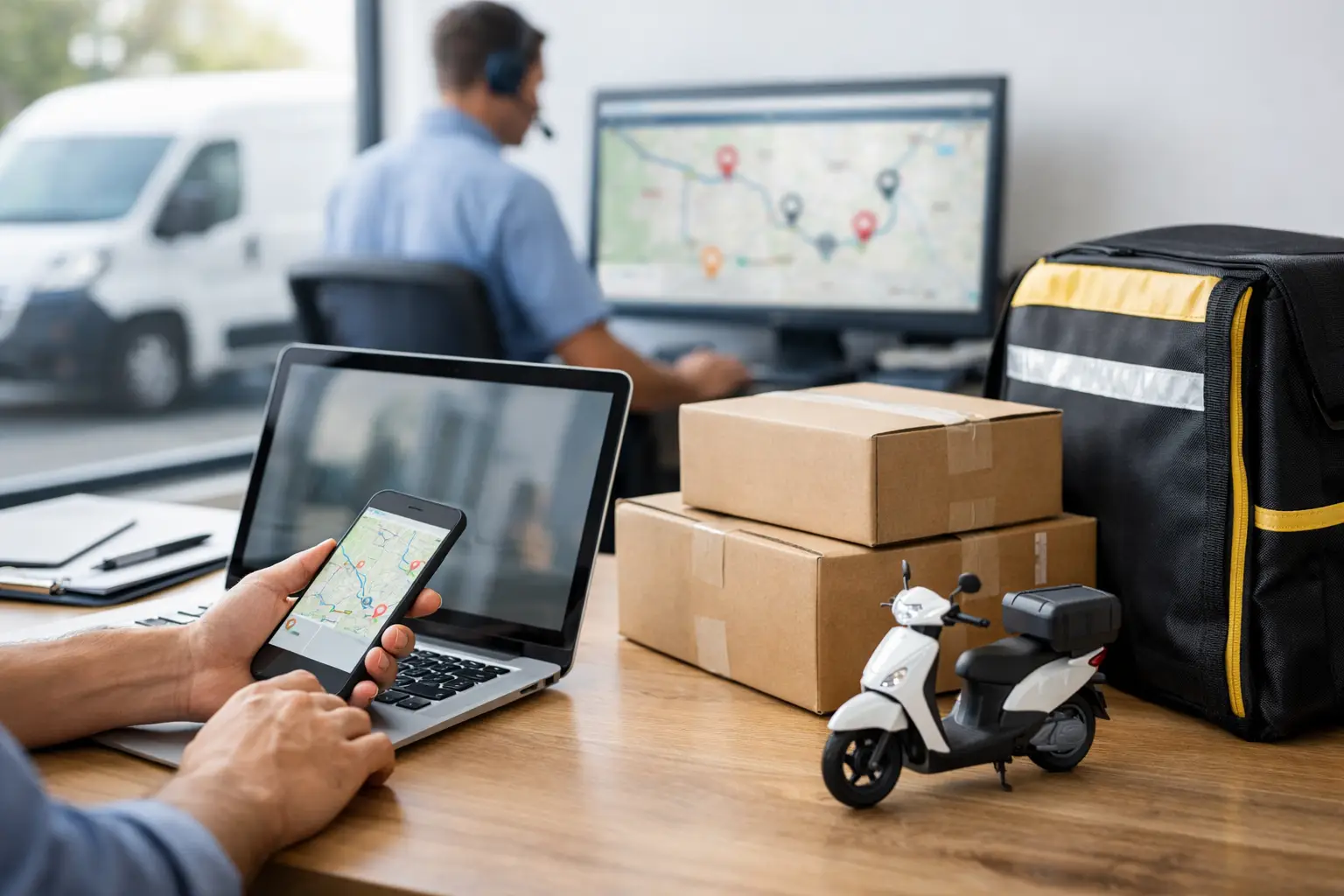
In courier management, invisible operations cannot be managed. Live tracking tools are valuable not just for showing the courier's location, but for identifying the risk of delays early. Real-time location tracking on a map alone is insufficient; the system also needs to generate operational signals such as task status, waiting time, route deviation, and delivery density.
Thanks to the control panel, the operations manager can quickly see which areas are experiencing backlogs, which couriers are at full capacity, and which orders pose a risk of SLA (Social Security Classification Level) violations. This allows for action to be taken before the problem affects the customer. This structure is particularly critical for multi-branch, franchise, or centrally distributed businesses.
Balance is key in live tracking tools. Overly detailed but difficult-to-interpret panels prolong decision-making time. Simple screens that clearly display critical KPIs provide greater operational benefit..
In delivery operations, a large portion of the call center workload stems from the same question: Where is my order? The frequency of this question often arises not from delivery delays, but from a lack of visibility. Systems that provide customers with timely and relevant information significantly reduce pressure on operations.
SMS, push notifications, or status-based automated messages are effective here. Updates such as "order received," "courier assigned," "out for delivery," and "delivered" seem simple, but they manage customer expectations. Dynamic updates to the estimated delivery time further increase satisfaction levels.
Here, an excessive communication flow can have a counterproductive effect. Too many notifications tire the customer, while insufficient notifications create uncertainty. The best model is one that provides truly meaningful updates based on operational events.
An unmeasured operation is often managed by intuition. However, in growing delivery structures, decisions need to be data-driven. Without metrics such as delivery time, first-attempt success rate, regional density, number of tasks per courier, reasons for cancellation, and waiting times, it's impossible to clearly see areas for improvement.
The value of a reporting tool lies not only in showing the past but also in establishing cause-and-effect relationships. For example, it's necessary to understand whether delays are concentrated in specific time intervals, recurring in specific customer segments, or caused by route inefficiencies in certain regions.
The analytical layer is often overlooked among the best tools for courier operations. This is because businesses initially focus on running the delivery process. However, after a while, the real difference is not just making deliveries, but managing them more intelligently. At this point, regular, comparable, and actionable reports come into play.
Courier operations rarely exist in isolation. They require data exchange with ERP systems, e-commerce infrastructure, order management systems, payment systems, CRM, and customer service tools. If the courier software cannot communicate with these systems, teams will have to manually transfer data, increasing the risk of errors.
Strong API integration is crucial here. Automated order placement, status information feedback, and delivery data transfer to other systems ensure both speed and accuracy. Especially for multi-channel businesses, integration is not an operational luxury but a fundamental necessity.
The existing technological infrastructure of the business is important here. Ready-made integrations offer quick deployment. More complex structures require customizable API capabilities. The right choice is one that can handle not only today's needs but also the volume six months from now..
Many software, applications, and tracking tools are available on the market. The right choice isn't about choosing the one with the most features. First, you need to clarify your type of operation: Do you offer same-day delivery, scheduled distribution, use your own couriers, or employ a hybrid model? These questions directly affect your tool needs.
The second critical point is scalability. Systems that work for small teams but slow down as volume increases will quickly require reinvestment. Ease of use, mobile performance, real-time visibility, reporting depth, and integration capabilities should all be considered together. This is where the value proposition of operation-focused platforms like Sentigo comes in: bringing control, visibility, and optimization under one roof instead of fragmented tools.
The best tool isn't the one that offers the most features, but the one that creates measurable improvements in your operation most quickly. The delivery floor is fast; but when managed with the right technology, it can be not only fast but also controlled. When planning your next growth step, first consider this question: Is your team delivering today, or are they actually managing operations?
This content has been prepared by the Sentigo Editorial Board.