 English
 Turkish
 05 MAYIS 2026


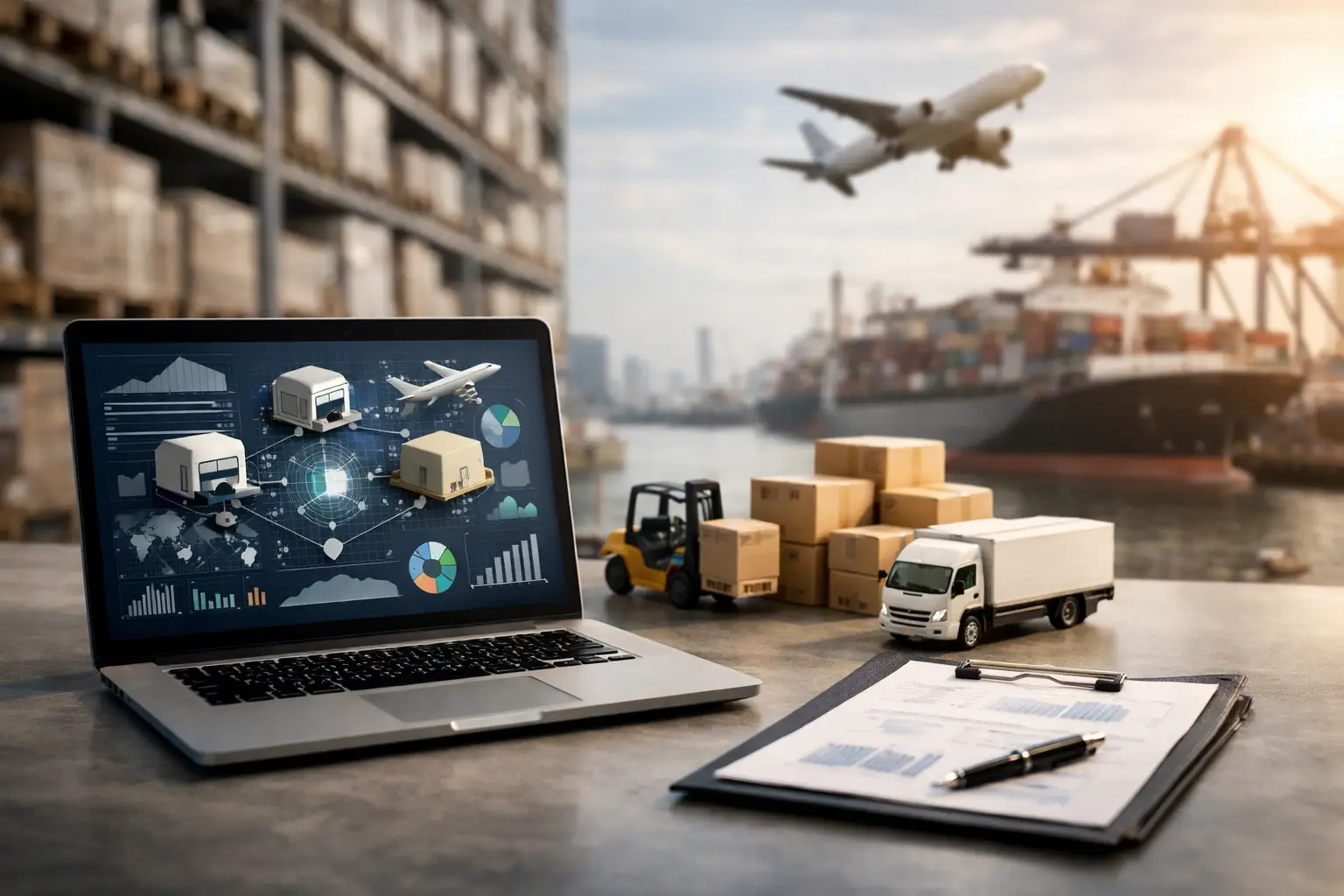
An order is received by the ERP system, warehouse preparation is handled on a separate screen, the shipment plan is created in another system, and delivery information is processed manually at the end of the day. A significant portion of the loss of speed in logistics operations begins right here. ERP-integrated logistics software transforms this fragmented structure into a single operational flow, bringing together order, inventory, shipment, courier, vehicle, delivery, and reporting processes under the same data logic.
For decision-makers, the real issue isn't purchasing software, but closing operational blind spots. If it's unclear when an order was confirmed, which vehicle was used, why a delivery was delayed, or where the return process stalled, growth directly generates costs. Therefore, the integration of ERP and logistics systems is no longer a technical choice, but a management necessity.
As logistics operations grow, manual coordination quickly becomes insufficient. Data delays directly impact service quality, especially in businesses with multiple warehouses, diverse transportation models, field teams, dealer networks, or e-commerce channels. If the sales team is looking at one piece of information, the warehouse at another, and customer service at missing screens, three different realities emerge for the same order.
ERP integration provides centralized control here. The moment an order is created on the ERP system, the logistics software can initiate the relevant operation, assign tasks based on capacity, plan routes, update shipment status, and re-process the information into the ERP when delivery is complete. Thus, data isn't transferred later; it's updated during the process flow.
This structure is crucial not only for speed but also for accuracy. Reducing manual data entry decreases problems such as incorrect addresses, missing products, erroneous delivery records, or delayed billing. Even small error rates can create significant costs, especially with high order volumes, so the impact of integration becomes visible quickly..
Many businesses view integration simply as order transfer. However, the real benefit lies in the two-way, continuous flow of data. Customer information, order details, product type, delivery priority, payment status, shipping rules, and warehouse information can be transferred from the ERP system to the logistics system. Conversely, data such as shipment status, delivery time, recipient information, return reason, transportation cost, and performance data are returned from the logistics software to the ERP.
This data flow varies depending on the business structure. In retail, speed and delivery visibility are paramount, while in distribution operations, route efficiency and vehicle utilization may be more critical. In enterprise supply chains, SLA tracking, multi-point shipping, and operational traceability become more decisive. Therefore, a good integration should not be uniform, but rather tailored to a specific scenario.
Many software solutions use the term "integration," but its scope can be limited. A system that transfers data only once a day doesn't provide the same results as a real-time system. Similarly, simply fetching an order isn't enough; if there's no status update, error management, task mapping, proof-of-delivery, and reporting feedback, the operation remains fragmented.
Therefore, businesses need to find clear answers to this question: Which data will be processed at which time, and according to which business rule? The quality of integration should be measured by operational results, not technically.
The most visible gain is control. Decisions are made faster when the operations manager can monitor pending shipments, vehicles in the field, reasons for delays, and completed deliveries on a single screen. The customer service team can see the real-time delivery status instead of providing estimates. The finance team can more clearly track processes that don't close until the delivery is completed.
The second major gain is efficiency. When task assignment, route planning, load consolidation, and delivery closing processes are system-supported, field teams' time loss is reduced. The same team can manage more deliveries, less phone traffic is generated, and the operations center doesn't have to constantly perform manual coordination.
The third issue is measurability. Without integration, many performance metrics are either underestimated or reported late. However, with the right structure in place, indicators such as delivery time, first-time success rate, vehicle utilization efficiency, return rate, regional density, and courier performance can be regularly monitored. This allows growth decisions to be based on data, not estimates.
In fact, it's beneficial for any business with an order and shipping relationship, but its impact is much more pronounced in certain structures. This group includes e-commerce and retail companies managing high-volume deliveries throughout the day, manufacturers and distributors with multi-point distribution, courier and cargo companies with intensive field operations, and logistics networks spanning different cities or countries.
Even at the SME level, this need begins early. Because the problem isn't just volume; the lack of integration between different systems creates significant time loss even in small teams. In large-scale organizations, the issue is more about standardization, auditability, and preventing operational fragmentation during growth.
No. Standard needs and specialized operations cannot be managed within the same structure. A company handling cold chain transportation and a brand managing intra-city express deliveries do not need the same reporting set, task logic, or mobile workflow. Therefore, when choosing ERP integrated logistics software, adaptability should be evaluated as much as product capability.
The balance here is important. Excessive customization can slow down the project and increase maintenance costs. An overly standardized approach forces the operation to conform to the system. The right model is to standardize core processes while being flexible in areas that create a competitive advantage.
The first point to consider is the integration architecture. Is data exchange with the ERP done via API, does it operate in real-time, and how is record management handled in case of errors? These questions are critical on the technical side because the reliability of the operation directly depends on them.
The second point is ease of use in the field. If warehouse personnel, operations center staff, drivers, or couriers have difficulty using the application, the theoretical strength of the integration will not be reflected in the field. Mobile application support, the simplicity of task screens, the delivery proof collection workflow, and the instant notification infrastructure are crucial for daily use.
The third area is reporting and visibility. Simply showing what is happening is not enough; the system must also make visible delay tendencies, bottlenecks, and capacity issues. Advanced dashboard structures, delivery-based tracking, and operational KPI monitoring make a significant difference in this regard.
This is precisely where the value that stands out in logistics-focused technology providers like Sentigo arises: building a highly integrated and scalable digital structure that is suitable for the real-world flow of courier, cargo, transportation, and delivery operations in the field.
The most common mistake is approaching the project like a software installation. However, these types of systems are process design projects. First, the existing workflow, exception scenarios, role structures, and data sources must be clarified. Otherwise, even if the integration goes live, teams will continue to work with outdated methods.
Another mistake is that only the IT team takes ownership of the process. When operations, warehousing, field management, customer service, and finance are not included in the project, critical requirements are overlooked. The result is a structure that works but has weak on-site impact.
Furthermore, trying to transform the entire system at once is risky. In most businesses, a phased transition is healthier. First, order and shipment flows are centralized, then route optimization, mobile delivery management, return processes, and performance reporting are implemented. This approach both accelerates adaptation and allows for a clearer measurement of the investment's impact..
The way to understand how well a logistics operation is performing is to look at how little it gets scattered when the volume increases. ERP integrated logistics software creates value at this point. It reduces data disorganization, increases decision-making speed, and makes the delivery chain visible.
Software selection alone doesn't make the difference. What makes the difference is a structure that makes the ERP and field operations speak the same language, increasing operational clarity rather than loss of control as the system grows. If your goal isn't just to manage more shipments, but to do so in a more predictable and measurable way, then the right integration structure is a step that shouldn't be delayed.
This content has been prepared by the Sentigo Editorial Board.