 English
 Turkish
 05 MAYIS 2026


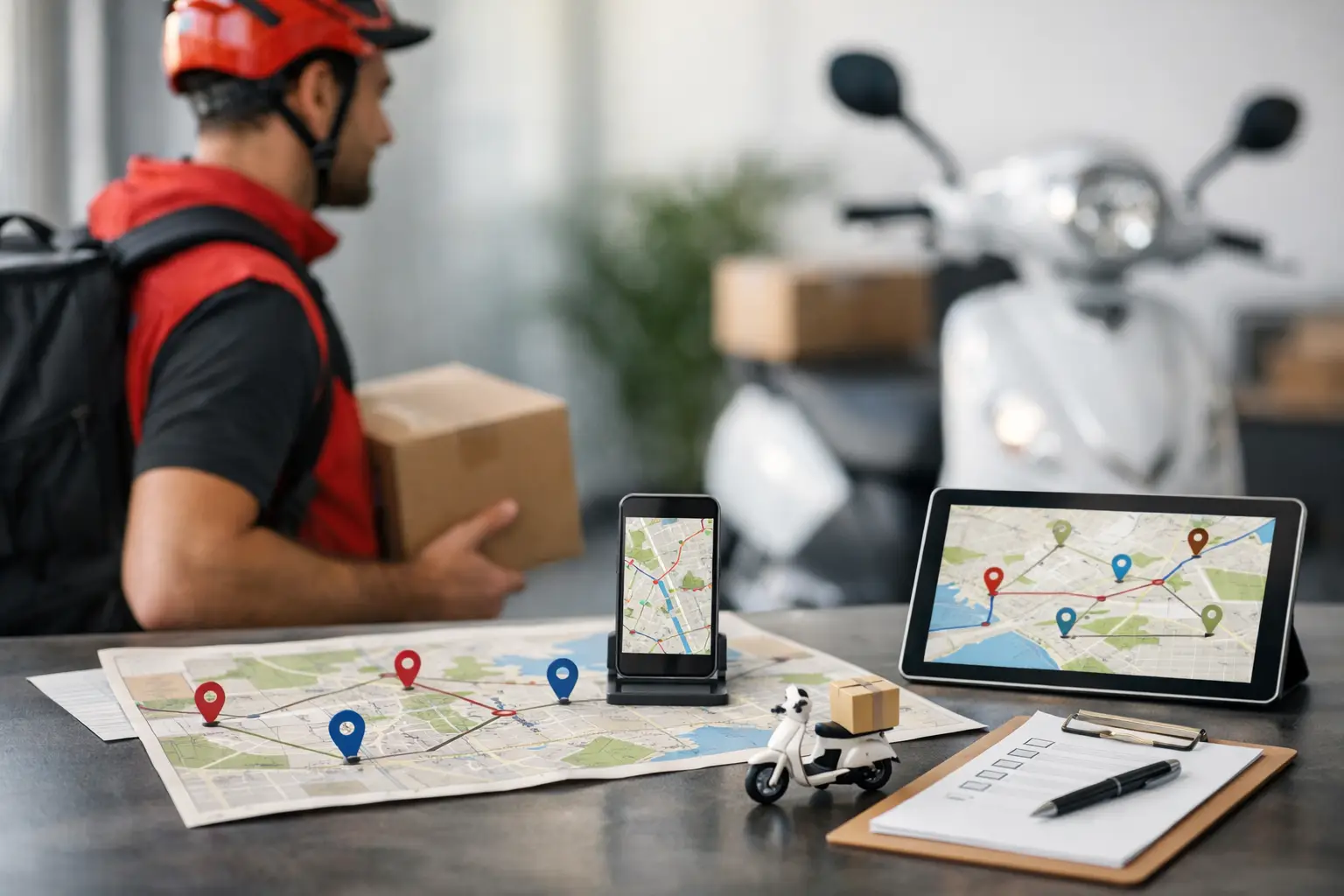
At 9:30 AM, a delivery operation might only have a few apparent delays. But the team at the operations desk knows this translates to increased customer demand, rerouted couriers, and rising costs later in the day. Therefore, the question of how to plan courier deliveries isn't just about scheduling routes. Effective planning means managing capacity, time commitment, field visibility, and real-time decision-making speed all within the same system.
Courier delivery planning is a direct profitability issue, especially for businesses with high-volume urban deliveries. As order volume increases, lack of planning affects not only delivery times but also customer satisfaction, team efficiency, and the sustainability of the operation. Therefore, a good planning approach goes beyond simply streamlining the daily workflow; it establishes an operational model that supports growth.
For field teams, planning is often approached at the level of "which courier will deliver which order." However, this is only the most visible part of the job. Healthy courier planning requires the simultaneous evaluation of variables such as order picking, zoning, courier capacity, delivery priority, traffic density, customer time window, and live tracking.
The first critical issue in the planning process is clearly defining the objective. The goal might be to find the shortest route, but this isn't always the best approach. In some operations, same-day delivery is prioritized, in others, low cost per kilometer, and in others, successful delivery within a specific time frame. When the objective is wrongly defined, even the best software will produce incorrect results.
If data quality is poor, planning will also be weak. Therefore, the first step in courier delivery is to standardize the core data that feeds the operation. Incomplete or inconsistent address information, disorganized delivery notes, or unclear order priority statuses create significant time losses in the field.
Businesses should first analyze order volume, delivery areas, average delivery time, daily workload per courier, and peak hours. Courier types should also be differentiated. Motorcycle courier, vehicle delivery, or pedestrian delivery models cannot be managed with the same planning logic. Each model has a different balance of speed, cost, and capacity.
A common mistake here is not using historical performance data. However, answering questions such as which neighborhoods experience the most delivery delays, at what times order congestion occurs, and which courier type works most efficiently on which route, makes the daily plan more accurate. When planning is based on data, not guesswork, control increases.
At the heart of a successful delivery plan is zoning. Especially in cities with high traffic density like Istanbul, it's difficult to achieve efficient results without dividing delivery areas into logical micro-zones. Leaving a large area to a single team increases the need for constant reassignment throughout the day and makes delivery fragile.
Zoning shouldn't be based solely on map-drawn boundaries. Order volume, building type, ease of parking, commercial density, one-way traffic regulations, and hourly traffic patterns must also be considered. Two zones with the same distance in kilometers can have completely different delivery challenges.
Capacity management also comes into play here. The number of jobs each courier can handle should be calculated practically, not theoretically. While 30 deliveries might seem possible on the system, the actual capacity might be lower in an area where apartment access is difficult, delivery notes are complex, and customer phone confirmation is required. Overloading might seem efficient at first glance, but at the end of the day, it increases delays, errors, and return rates..
This choice depends on the operational structure. In businesses with similar daily order patterns, fixed zone assignments reinforce courier habits and increase field speed. Conversely, if order volume fluctuates significantly throughout the day, dynamic route planning yields more accurate results.
The advantage of a dynamic model is its ability to account for instantaneous order inflows and traffic changes. However, this requires a robust software infrastructure and live operational visibility. Otherwise, constantly changing tasks can create confusion in the field. The correct approach is to establish a hybrid model based on the business's order structure. That is, fixed distribution in core regions and dynamic routing in areas experiencing high fluctuations.
Courier delivery isn't just about distance planning; it's also about time commitment management. If a customer is promised delivery within 2 hours, the route plan should center on that SLA. Otherwise, a route that looks efficient on the map might fail in the customer experience.
Therefore, orders should be categorized by priority level. Urgent deliveries, shipments that need to be delivered within a specific timeframe, standard deliveries, and orders requiring retry shouldn't be placed in the same queue. In operations without a priority engine, teams spend the day putting out fires.
Being realistic in SLA planning is also crucial. Giving overly ambitious delivery times to gain customer satisfaction might seem appealing in the short term. However, unmet promises in the field create higher support requests and lower trust. Good planning aligns the marketing promise with operational capacity.
A delivery plan isn't something that's prepared in the morning and implemented throughout the day without change. Traffic accidents, canceled orders, customers not being at the address, or new high-priority tasks constantly affect the plan. Therefore, live tracking is not an afterthought, but a direct part of the planning process.
The operations manager needs to be able to see in real-time which courier is where, how many deliveries are left, how much they're deviating from the target time, and where congestion is occurring. Without this visibility, reassignment decisions are delayed. Delayed decisions, in turn, create a chain reaction of delays for the rest of the day.
Mobile application support plays a critical role here. The ability for the courier to instantly mark their delivery status, report absences, see route updates in the field, and for the central office to monitor this data on a single screen makes the operation more agile. Delivery-focused software infrastructures like Sentigo reduce the disconnect between the plan and the field in this regard.
Up to a certain volume, delivery operations can be managed using phone traffic, messaging groups, and manual schedules. However, as the number of orders increases, these methods don't generate control; they only create congestion. Manual planning quickly becomes flawed, especially when dealing with multiple zones, courier types, or delivery rules.
Software-assisted planning allows for automatic order classification, assignment to the appropriate courier, route optimization, live delivery tracking, and performance reporting at the end of the day. The key value here isn't just speed; the real difference lies in making decisions measurable and repeatable.
API integrations are also a crucial layer. Regardless of whether an order comes from an e-commerce system, ERP, call center, or store panel, gathering all data on a single operational screen improves planning quality. When data is fragmented, teams gather information first, then make decisions. With an integrated structure, decision-making time is shortened.
The quality of distribution planning cannot be judged solely by the number of orders delivered. True performance requires monitoring on-time delivery rate, deliveries per courier, cost per kilometer, first-attempt success rate, and reassignment frequency.
It's crucial not to judge performance solely on a courier basis. Low performance isn't always due to field personnel. Incorrect zoning, poor address quality, unrealistic SLA targets, or unplanned order loading can also directly impact the outcome. A sound analysis requires evaluating human performance and system design separately.
A good reporting model should show not only what happened but also why it happened. This allows the management team to focus on process improvement instead of discussing the same problems every day.
The most common mistake in courier delivery is managing a growing operation with a small-scale mindset. As order volume increases, zoning logic isn't updated, courier capacity isn't recalculated, and new customer expectations aren't incorporated into planning rules. As a result, the team grows, but control doesn't.
Another mistake is making plans that only address the immediate needs. Even if the day's deliveries are completed, if data isn't collected, delay causes aren't categorized, and bottlenecks aren't addressed, the operation will remain stuck. Strong planning, however, integrates daily management with continuous improvement under one roof.
Planning courier delivery is much more than drawing lines on a map. When the right data, the right capacity, the right prioritization, and live field visibility come together, the delivery operation becomes faster and more predictable. This is where the real difference begins for decision-makers: fewer surprises, greater control, and a delivery structure ready for growth.
This content has been prepared by the Sentigo Editorial Board.