 English
 Turkish
 05 MAYIS 2026


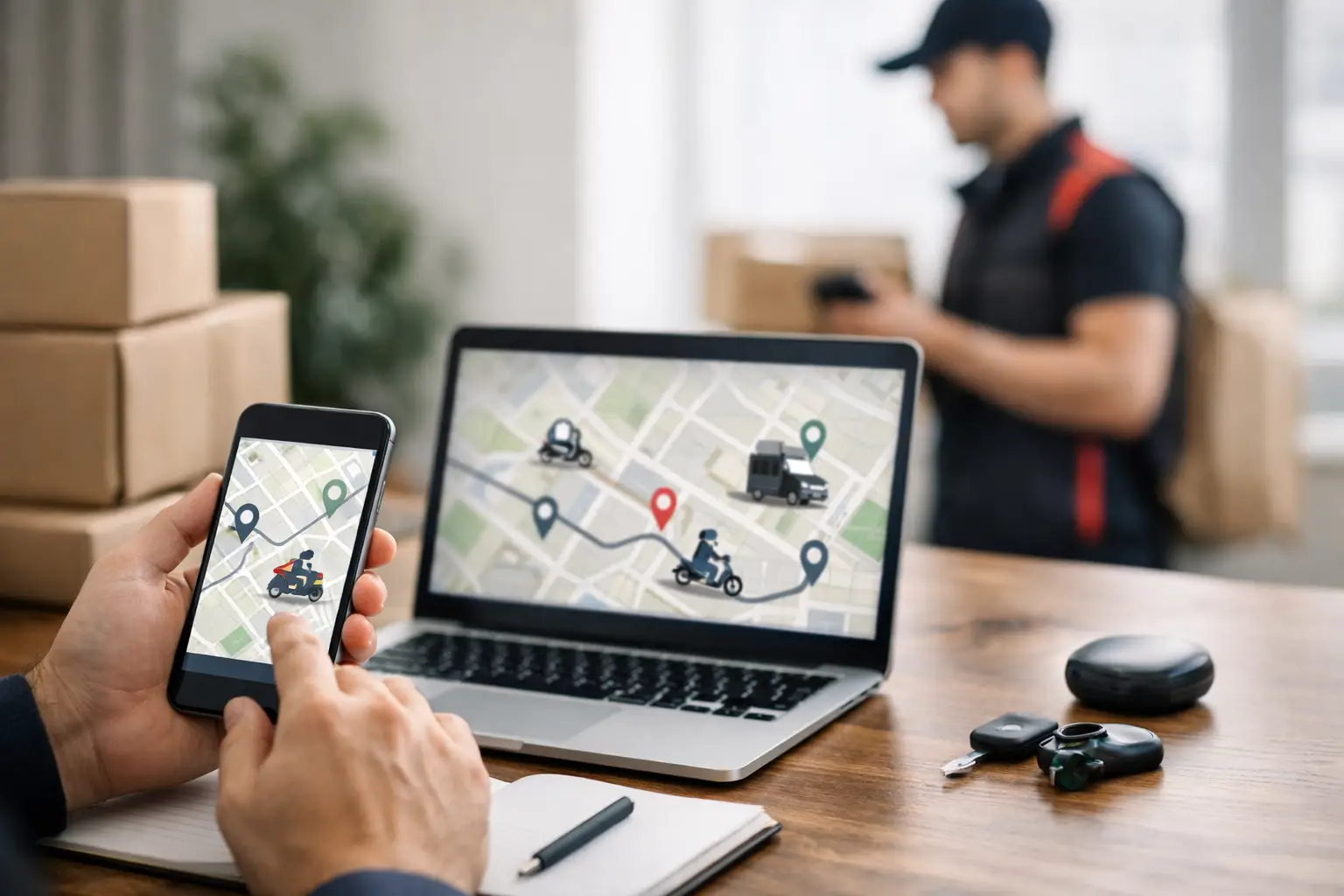
As a delivery operation grows, the problem usually starts in the same place – the number of orders increases, the team expands, phone traffic rises, and field visibility decreases. At this point, courier tracking software ceases to be merely a tool that tracks vehicles on a map; it becomes a fundamental system that directly impacts the speed, cost, and quality of service of the operation.
For businesses managing deliveries, the real issue isn't buying software, but stopping the loss of control. Which courier is where, which delivery is delayed, which route is generating unnecessary costs, which order is the customer calling the support team for – operations that cannot provide instant and accurate answers to these questions will not achieve growth or efficiency. They will only increase complexity.
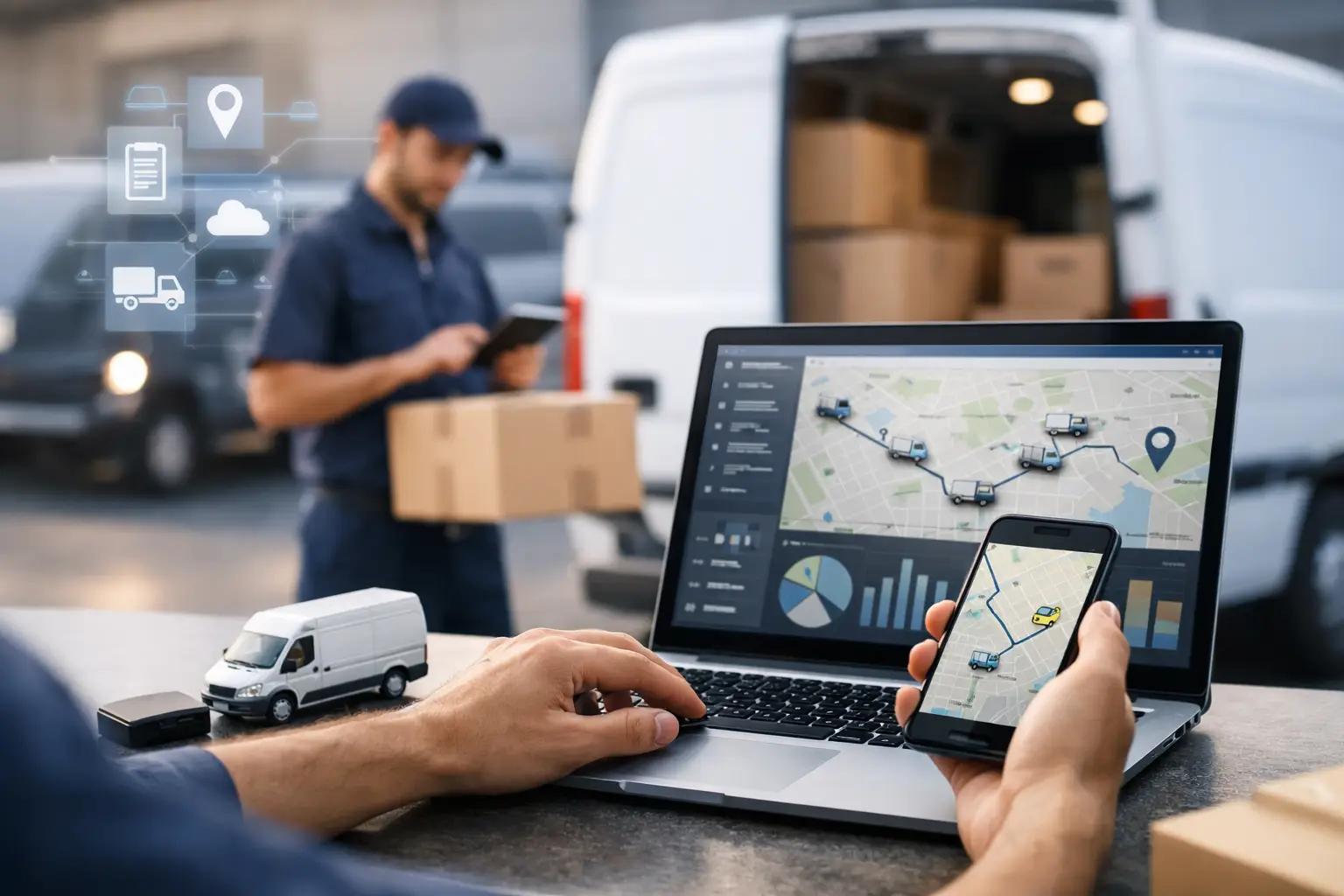
Courier tracking software is an operational management layer that makes delivery processes visible end-to-end and reduces manual tracking. Its primary function isn't just showing the courier's location. It centralizes the entire flow, from order entry to task assignment, route planning, live tracking, delivery verification, and performance reporting.
This distinction is important. There are applications on the market that only show vehicle location, as well as simple mobile solutions that relay tasks to the field team. However, for businesses managing high order volumes, the need is not for fragmented tools, but for an integrated structure that accelerates decision-making. This difference is felt very quickly, especially in restaurant deliveries, e-commerce last-mile operations, technical service delivery, distribution warehouses, and regional delivery networks.
A well-designed system simultaneously addresses three critical needs of operations teams: visibility, automation, and measurability. Visibility enables monitoring the field, automation reduces human intervention, and measurability clarifies areas for improvement.
In delivery operations, costs often don't explode in a single stroke. Small inefficiencies accumulate and disrupt the overall picture. Incorrect courier assignments, empty miles, delayed orders, customer calls to the call center, manual status updates, and incomplete delivery records create a significant operational burden at the end of the day.
The right courier tracking program reduces these losses from several different angles. Thanks to live tracking, teams see delays as they occur, not after. Automated assignment mechanisms determine the most suitable courier based on distance, volume, or capacity. Route optimization, especially in multi-stop deliveries, reduces time and fuel consumption.
There's an important fact here: not every business needs a system with the same level of depth. A single-branch organization managing 80 orders a day has different expectations than an organization with multiple locations and thousands of deliveries. Therefore, the selection criterion shouldn't be the software offering the most features, but rather the software that improves the existing operation with the least friction.
The first thing to look at is the quality of live tracking. If location data is delayed or field movements don't appear clearly on the screen, the rest of the software's promises become meaningless. Even a few minutes of data delay can create a chain of incorrect decisions for operations teams.
The second critical point is task assignment. Manual assignment seems manageable at low volumes. However, as the number of orders increases, both the error rate increases and the workload of the dispatch team grows unnecessarily. Therefore, the system's logic for automatic courier assignment, priority rules, and how it manages exception scenarios should be examined.
The third point is route management. Not every route optimization claim yields the same results. Some systems are good at single-vehicle tracking but fall short in multi-stop, time window, or region-based delivery scenarios. The practical value of a route engine should be tested, especially in same-day delivery, restaurant deliveries, or operations originating from distribution centers.
The fourth point is customer communication. If a customer cannot see where their order is, the operations team has to compensate for this deficiency by phone. Automated notifications, delivery status messages, and tracking links reduce the support workload while increasing customer trust.
Finally, integration capability should be evaluated. A courier solution that doesn't communicate with ERP, WMS, e-commerce infrastructure, POS, or order management systems will create data disconnects in the medium term, even if it works in the short term. As operations grow, the real value comes not from adding a new screen, but from connecting existing systems.
A live courier map provides visibility but is not sufficient on its own. The real value lies in translating this data into action. For example, does the system mark delayed deliveries, show courier density regionally, report reasons for failed deliveries, and allow for reassignment? These questions are important because the operations team wants to intervene, not just monitor.
The mobile application side is often underestimated. However,If courier experience is weak, central discipline won't translate to the field. Courier task acceptance, navigation access, delivery proof upload, status updates, and break management should progress quickly within the application. Excessive clicks for the field team mean data loss for the central team.
Reporting also determines decision quality. If delivery time, number of deliveries per courier, regional performance, failed attempt rate, waiting time, and mileage data are not measured, improvement efforts will be based on assumptions. A good program not only manages daily operations but also strengthens weekly and monthly planning.
If sector differences are ignored when choosing a courier tracking program, the software will not meet expectations. In restaurant deliveries, speed, proximity-based assignment, and customer notification are paramount. In e-commerce distribution, time slot management, multiple delivery scheduling, and delivery proof become more critical. In cargo and distribution operations, branch structure, bulk shipment flow, and return processes can be more decisive.
Therefore, during the purchasing process, it's necessary to look at your own operational scenario, not just the general feature list. The software may look good during the demo; The real question is how effectively it works during peak hours and under real-world conditions. Scalability should be tested early, especially in multi-branch structures, franchise operations, or companies planning to expand their courier network.
Many companies focus on product displays when choosing courier software, neglecting the application model. However, a large portion of unsuccessful projects stem not from a lack of features, but from a weak transition plan. If data transfer, user authorization, mobile application habits, training processes, and integration sequence are not clearly defined, the system will encounter resistance in the field.
The correct approach is a phased transition. First, visibility and task management are implemented, then automated assignment, notifications, reporting, and integrations are expanded. This approach allows for progress without interrupting operations and helps teams adapt to the new process more quickly.
The platform's support structure is also crucial at this point. Not every solution in the SaaS model is implemented at the same speed. Especially in structures requiring ERP, WMS, or e-commerce integration, the technical team's industry experience directly impacts the implementation time. Integration-focused and modularly designed platforms like Sentigo can offer a more controlled transition environment here.
A software program looking good isn't the same as it being suitable for your operation. The following questions must be clearly answered during the decision-making process: Does the system maintain its performance when our order volume increases? Does it truly reduce the burden of manual operations? Can it exchange data with our existing systems? Does it provide visibility on the customer side? Is it easy for field teams to use?
Furthermore, the total cost shouldn't be considered solely from the license perspective. Training time, installation effort, integration needs, support quality, and process change costs should also be evaluated. A seemingly cheap solution can become more expensive if it creates additional work within the operation.
Courier tracking is no longer just about monitoring deliveries. This area is an operational decision that directly links cost control, service quality, team efficiency, and customer experience. When you choose the right program, you not only see the field, but you also make the business's delivery capacity more predictable and manageable.
This content has been prepared by the Sentigo Editorial Board.