 English
 Turkish
 05 MAYIS 2026


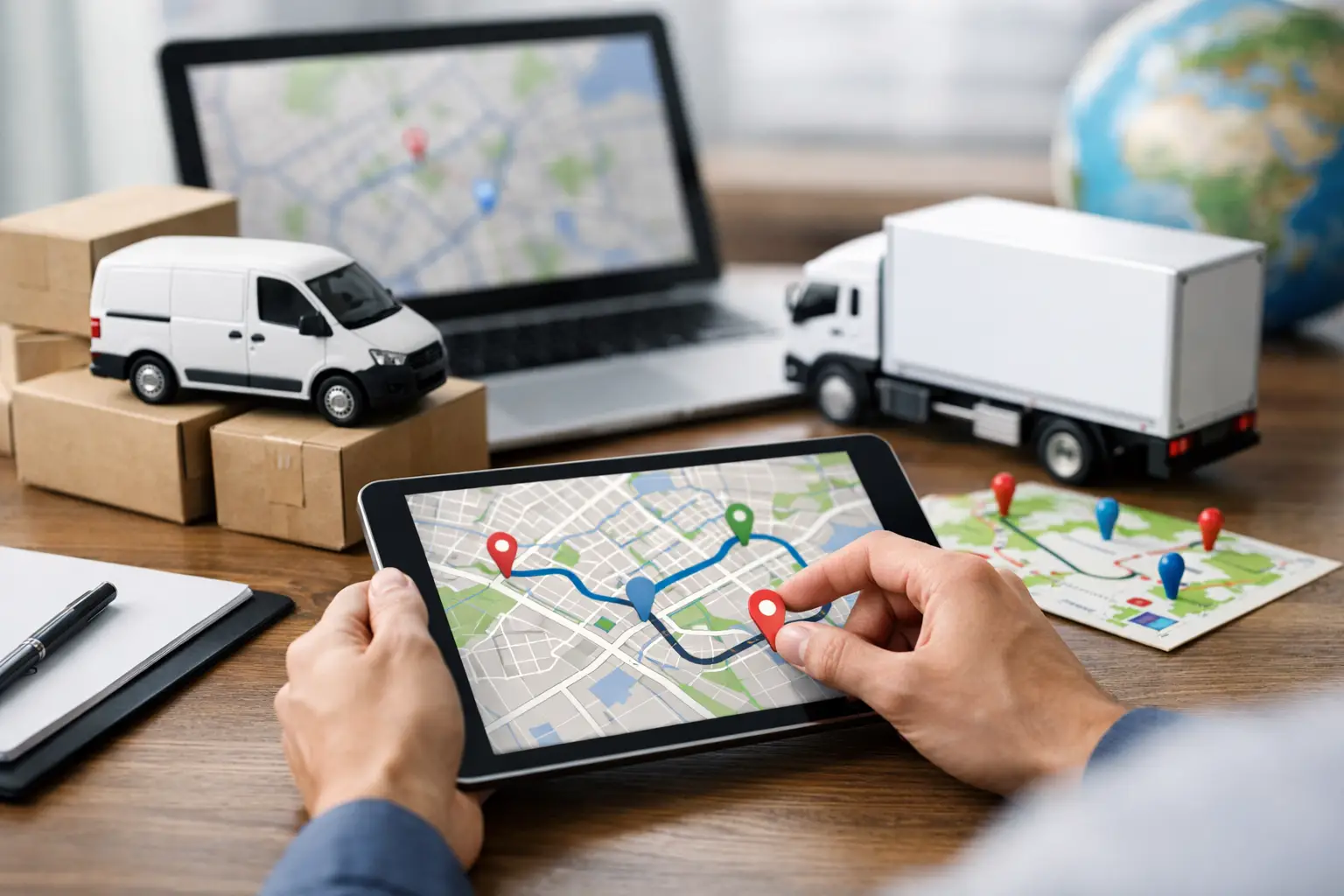
At the end of the day, the same question arises: Why did the vehicles return later than planned, why were some deliveries delayed, and why did fuel costs exceed the target? At this point, the issue isn't just driver performance, but directly the route planning. The question of how to optimize delivery routes is a fundamental management issue, especially for businesses with multi-point distribution, in terms of operational efficiency, customer satisfaction, and cost control.
Route optimization isn't just about finding the shortest route. In real operations, delivery time commitments, vehicle capacity, driver shifts, traffic congestion, regional constraints, return processes, and priority orders are managed simultaneously. A plan focused solely on distance often breaks down in the field.
A well-designed route structure produces three results simultaneously. First, it reduces mileage and fuel costs. Second, it reduces the time spent per delivery. Third, it provides the operations team with greater control. This control has a wide range of effects, from identifying the cause of delays to proactively detecting capacity bottlenecks.
Especially in markets with high traffic fluctuations like Istanbul, static planning quickly becomes insufficient. A route that seems correct in the morning may create operational burden in the afternoon. Therefore, optimization should be treated not as a one-off plan, but as a management model based on live data.
Many businesses try to solve route problems with software, but if data quality is poor, the results are limited. If addresses are incomplete, delivery timeframes are unclear, or vehicle capacity information is outdated, the system will produce inaccurate plans regardless of how powerful it is.
The first step is to standardize operational data. Order addresses need to be verified, delivery zones clearly defined, and product volume and weight information updated. In addition, vehicle-based capacity, driver working hours, and delivery priority rules must be clearly integrated into the system.
The critical point here is: Route optimization seems like a mathematical problem, but real success in the field depends on data discipline. Missing data is the most frequent cause of unplanned deviations.
Incorrect or incomplete addresses directly impair route performance. An error that seems like a few minutes' deviation in navigation can reduce the total number of deliveries by the end of the day. Similarly, if the delivery intervals given to the customer are too wide or unrealistic, the routing engine cannot prioritize effectively.
Therefore, address verification, location pinning, and clear time window definition are non-technical but crucial parts of optimization.
One common mistake made by operations managers is believing the shortest route is the best. However, the best route is the one that can be implemented in the field with the least deviation. Sometimes, a plan a few kilometers longer can provide fewer turns, a more balanced load distribution, and higher time accuracy.
For example, let's consider a team making both corporate and individual deliveries in the same area. Acceptance times are fixed at corporate locations, while the probability of reaching the recipient is more variable at individual deliveries. In this case, instead of arranging the route solely based on proximity, prioritizing points with low acceptance risk within specific time intervals yields more accurate results.
In short, the goal of optimization is operational performance, not theoretical efficiency. If the plan doesn't hold true in the field, its value is limited if it looks good on paper.
If a delivery schedule is created in the morning and remains unchanged throughout the day, this structure is incompatible with today's urban logistics realities. Traffic accidents, sudden orders, customer delays, vehicle breakdowns, and regional congestion disrupt the plan throughout the day.
Therefore, dynamic updating capability is necessary in route optimization. The route must be recalculated using live vehicle location, delivery status, and traffic data. This allows the operations center not only to monitor what is happening but also to intervene.
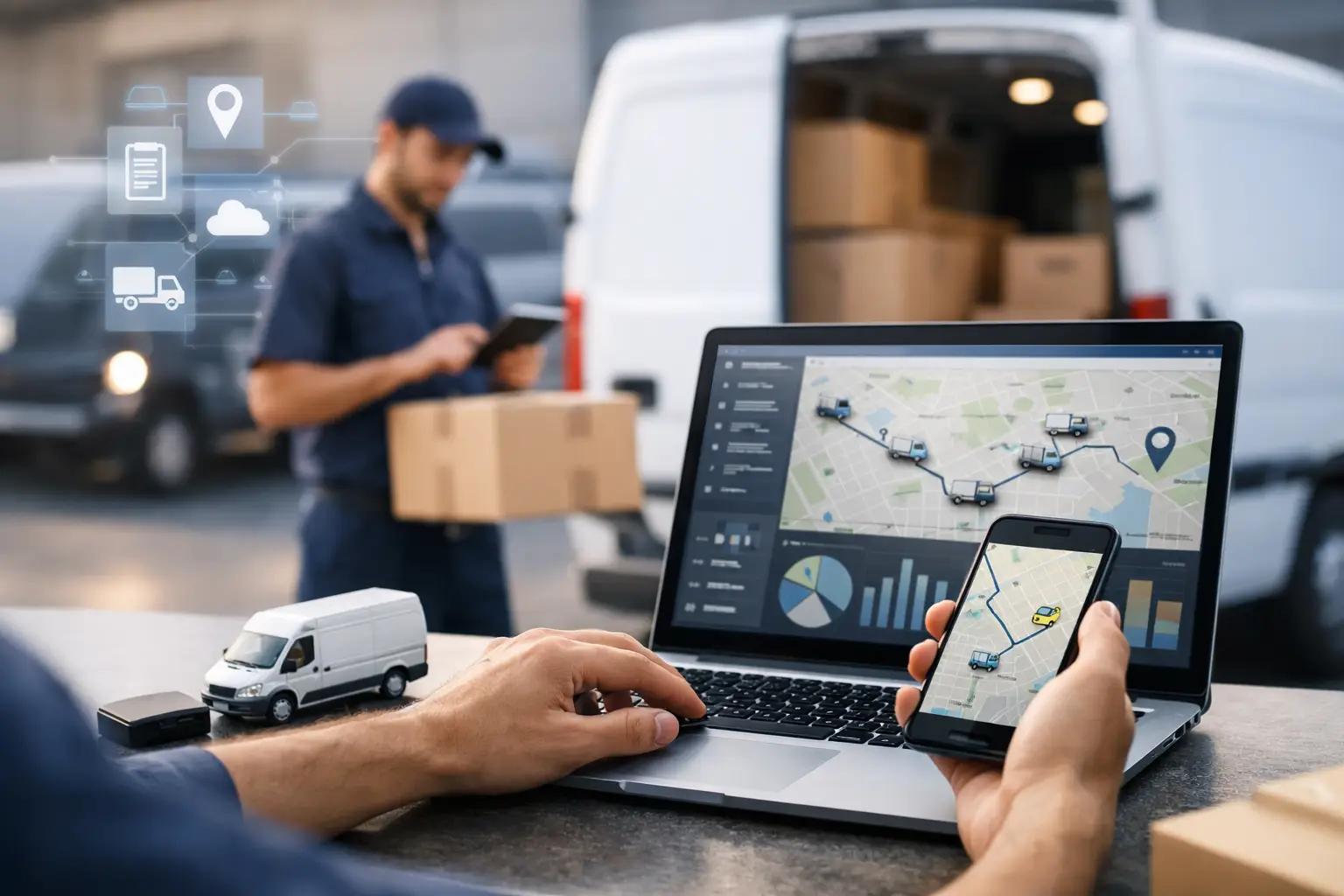
This is where the value of technology investment becomes clear. In structures without real-time visibility, teams guide drivers by phone, information arrives late, and decision quality decreases. However, digital route planning and live tracking infrastructure make it possible to see deviations early and reassign routes.
Not every operation needs to constantly regenerate routes. However, if there is high order volume, variable urban traffic, same-day delivery expectations, and narrow delivery windows, the static model quickly becomes insufficient. Dynamic planning makes a significant difference, especially for businesses involved in e-commerce, fast delivery, distribution, and multi-vehicle management.
Route optimization is not just a sequencing problem. It is also a problem of assigning the right load to the right vehicle for the right region. Overcapacity, unnecessary vehicle departures, or...If there is an incorrect zone allocation, the route engine cannot compensate for it later.
Therefore, operations should first be zoned at the macro level, then routes should be sequenced at the micro level. While planning every order from a single pool without zoning may seem flexible in some structures, it produces inefficiencies in the long run. Especially in businesses with regular order patterns, fixed or semi-fixed zone structures improve route quality.
There is one exception. In structures where demand changes sharply daily, rigid zoning can lead to wasted capacity. In this case, a hybrid model is more appropriate. Main zones are maintained, but when density increases, vehicles are shifted to neighboring zones in a controlled manner.
No matter how well a route is planned, if it is too complex for the driver to use, resistance will arise in the field. Plans that are updated too frequently, whose logic is not understood, or that are not clearly visible in the mobile application reduce applicability.
Therefore, a good route solution should not be evaluated solely by the power of the algorithm. The next stop, delivery priority, special notes, and deviation warnings should be clearly shown to the driver. The clearer the information flow between the operations center and the driver, the more consistent the route performance will be.
Technology comes into play here not to exclude humans, but to reduce the burden of decision-making. User-friendly mobile flows and clear task screens translate theoretical optimization into real efficiency in the field.
It's not enough to feel you've optimized the delivery route. Unmeasurable improvement doesn't create a sustainable management advantage. Therefore, several key metrics need to be regularly monitored.
Cost per delivery, number of deliveries per kilometer, on-time delivery rate, vehicle occupancy level, route deviation rate, and failed delivery rate are among the most critical indicators. These metrics should be viewed not only in total but also by region, vehicle, driver, and time period.
Some businesses focus on fuel savings, while others prioritize delivery speed. There is no single right answer here. The optimization goal of a brand promising same-day delivery differs from that of a B2B operation with planned distribution. The important thing is that the route strategy aligns with the business objective.
Manual planning can work up to a certain volume. However, as the number of orders, vehicles, and delivery constraints increase, the limitations of Excel-based structures quickly become apparent. The problem isn't just time loss. Incorrect assignments, low visibility, and delayed interventions increase costs.
At this point, route planning software needs to be evaluated. A good system is expected to automatically ingest orders, take vehicle and capacity constraints into account, provide live tracking, and allow intervention space for operations teams. Furthermore, the ability to integrate APIs with existing ERP, e-commerce, call center, or warehouse systems is a significant advantage.
Logistics-focused digital infrastructures like Sentigo address route planning not as a standalone screen, but in conjunction with live tracking, driver management, delivery flow, and reporting. The real value for decision-makers emerges here: less manual work, higher visibility, and more measurable performance.
If delays are increasing in your operation, vehicle usage is inconsistent, and your team is coordinating by phone throughout the day, the problem is most likely not just congestion. The planning model is not meeting current needs. The solution is to clean up address data, clearly define capacity and time constraints, review the zoning strategy, and switch to a route infrastructure that works with live data.
The best results are achieved not by establishing a perfect system all at once, but through incremental improvement. First, visibility is ensured, then plan quality is improved, followed by dynamic optimization and integration layers. A route structure that truly benefits your operation is created when the mathematics provided by the software correctly aligns with your on-site workflow.
Delivery performance doesn't improve by chance. When the right data, the right design, and the right technology come together, routing transforms from a cost center into an operational force supporting growth.
This content has been prepared by the Sentigo Editorial Board.