 English
 Turkish
 05 MAYIS 2026


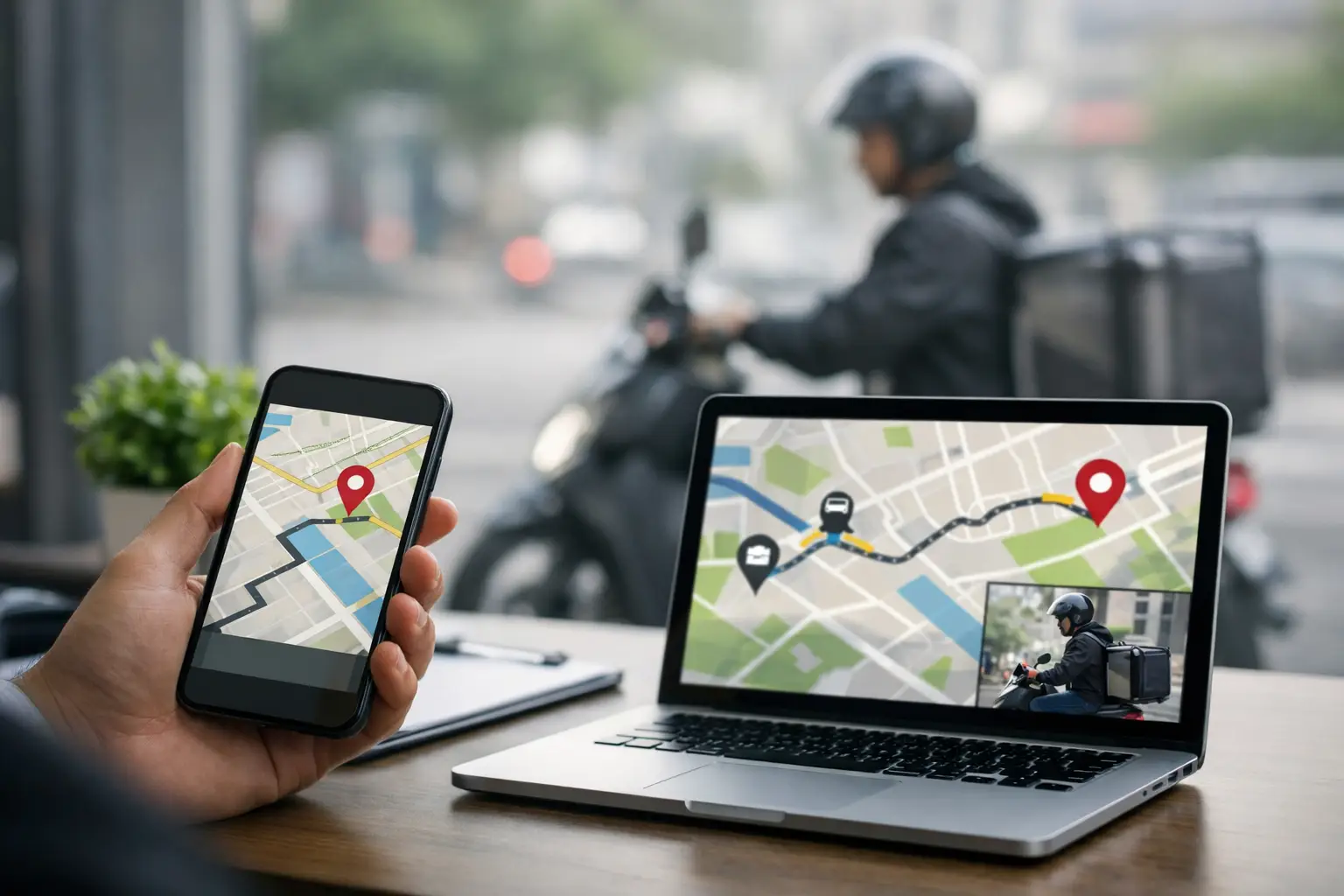
After an order is dispatched, the most critical question is usually the same: Where is the courier right now? At this point, the question of how to do live courier tracking is directly related not only to customer satisfaction but also to operational control. If the delivery process is not visible, delays, misdirections, call center workload, and delivery costs all increase simultaneously.
Live tracking is no longer an additional feature; it's a fundamental tool for managing field activity from the center. Especially for businesses running multiple courier operations, real-time location, route status, delivery step, and exception management should be viewable on a single screen. Otherwise, control decreases as the team grows.
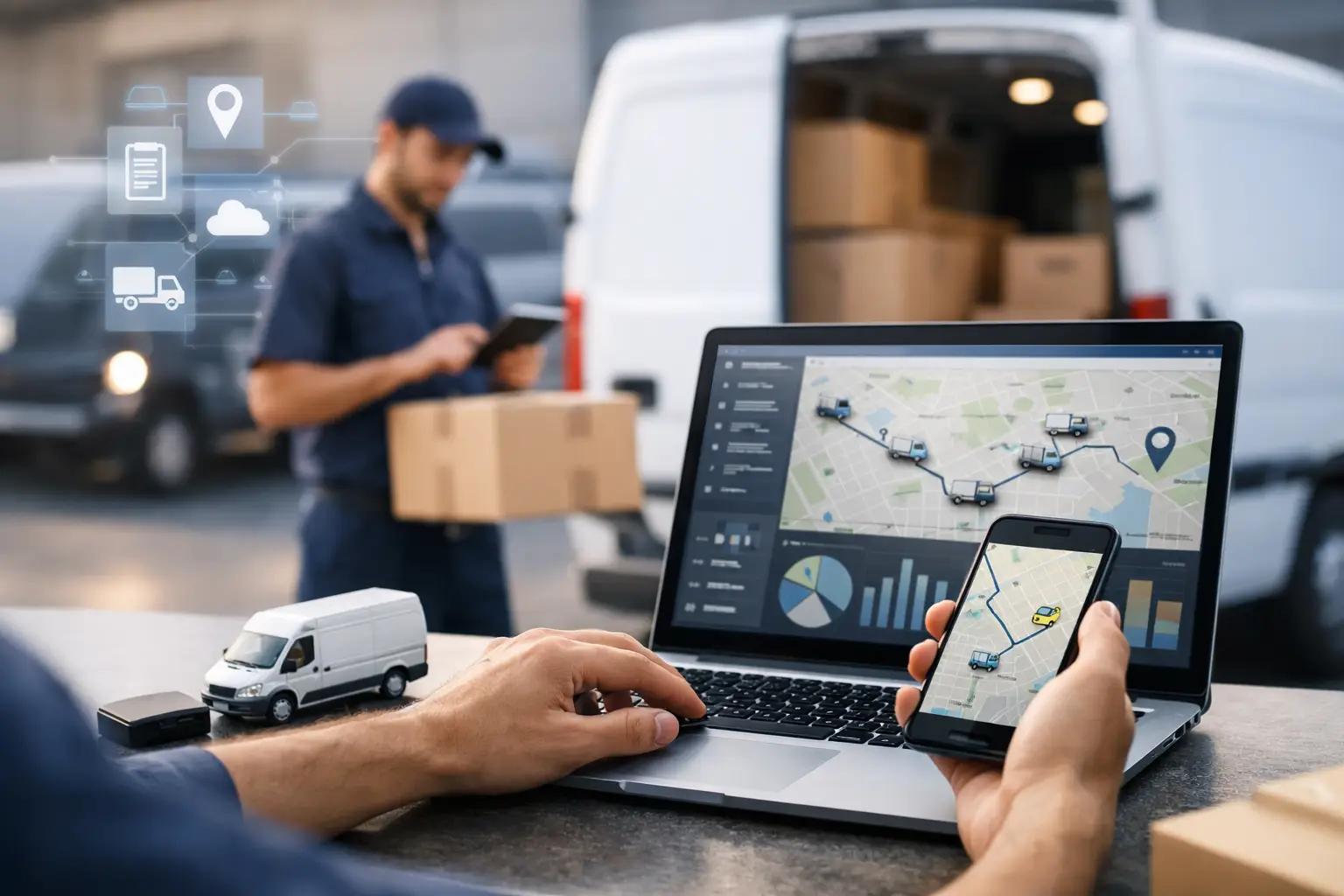
Live courier tracking is done through the real-time data stream between the courier's mobile application and the central management panel. The system is based on GPS data from the courier's device, task status updates, route information, and delivery actions. The management screen makes this data meaningful and makes the operation visible in real time.
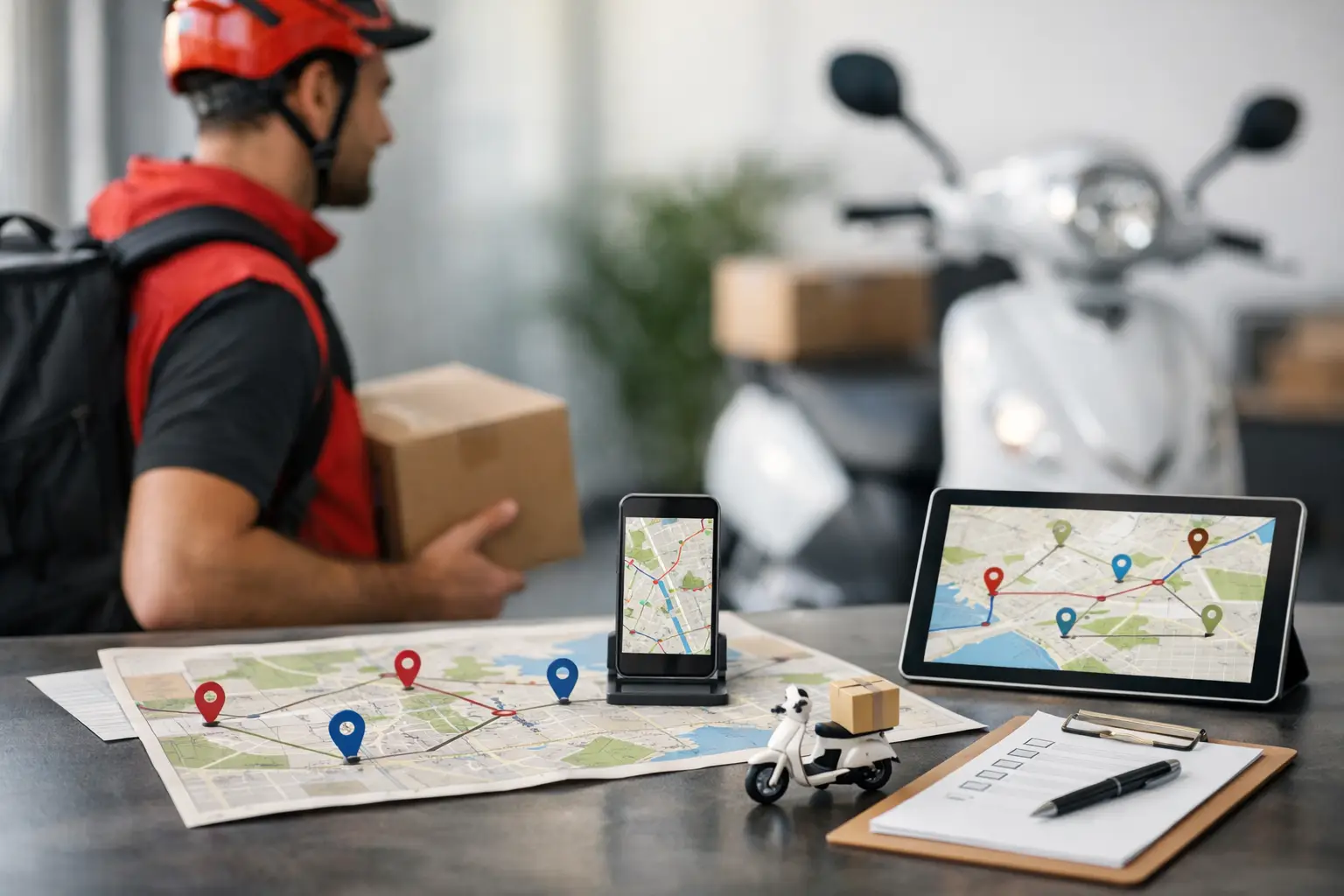
In practice, the process works as follows: The courier accepts the assigned delivery via the mobile application, the application transmits location information to the system at regular intervals, and the central team tracks this movement on a map. The system changes its status in real-time when the courier approaches the delivery location, arrives at the address, completes the delivery, or reports a problem. This allows for tracking not only the vehicle or person, but the entire delivery lifecycle.
The critical distinction here is: simply showing a location is not the same as managing an operation. The movement of a point on the map is useful, but the real value for the business lies in associating that movement with orders, time targets, route efficiency, and customer information.
A healthy, functioning live courier tracking infrastructure involves several layers working together. The first layer is the courier's mobile application. The application displays task assignments, provides navigation support, records delivery steps, and transmits GPS information to the system. Ease of use for the courier is crucial here. Complex screens lead to data loss in the field.
The second layer is the operations panel. In this panel, managers can simultaneously view active couriers, pending tasks, delay risks, regional congestion, and delivery performance. A good panel doesn't just track; it also allows for actions such as reassignment, route intervention, and priority changes.
The third layer is integration. Orders can come from e-commerce infrastructure, ERP systems, call center screens, or marketplace flows. If these sources are not connected to the tracking system, the operation becomes fragmented. The order is in one place, the courier in another, and customer communication in yet another. This reduces the value of live tracking.
The final layer is notifications and reporting. Delivery status messages sent to the customer, alerts to the internal team, and performance reports presented to management should all be fed from the same data backbone. This transforms real-time visibility into measurable improvement.
The short answer: Not always. GPS is a fundamental component for live tracking, but it's not sufficient on its own. Because location data is raw data. What makes it meaningful is context.
For example, the courier might be waiting at the same spot for a long time. Is this due to traffic, waiting during delivery, going to the wrong address, or being out of commission? It's not possible to understand this clearly just by looking at the coordinate information. Therefore, status codes, task flow, delivery timestamps, and courier interactions should be included in the system.
Also, GPS accuracy doesn't provide the same performance in every region. Dense urban environments, enclosed spaces, or poor connectivity can affect data quality. Therefore, well-designed systems optimize data update frequency, manage offline scenarios, and can later synchronize lost data.
The most efficient model is one where all steps, from the moment the order is placed in the system to proof of delivery, are digitized. An order is created, a suitable courier is assigned, a route suggestion is generated, the courier accepts the task, the system tracks movement, the customer is informed, and the record is closed when the delivery is complete. The less manual phone traffic there is in this flow, the more scalable the system becomes.
The courier assignment logic also affects the success of live tracking. Proximity-based assignment is not always the most accurate method. The courier's current workload, area density, delivery priority, and vehicle type must also be taken into account. Otherwise, the courier that appears closest on the map may be the most expensive option from an operational perspective.
Collecting data after delivery is equally important. Data such as delivery time, areas where delays occurred, and time intervals where congestion was experienced strengthens the planning for the next day. Live monitoring is not only a real-time monitoring tool, but also a planning engine.
Live monitoring is crucial for business operations.It provides internal visibility while reducing uncertainty on the customer side. A customer who doesn't know where their delivery is naturally turns to the customer support line. This increases the operational burden. However, when estimated arrival time, delivery stage, and delay information are shared correctly, the customer has a more controlled experience.
The key point here is the level of information shared. Not every business wants to open all map details to the end user. Some only want to show statuses like "on the way," "approaching," and "delivered." Others prefer a live map display. The right choice depends on the type of operation and customer expectations.
Especially in fast delivery, same-day delivery, and field service operations, a transparent tracking experience directly affects brand perception. Even if a delivery is delayed, if the information is strong, the loss of satisfaction remains more limited.
The first criterion is that the system operates in real time. However, consistent and reliable data flow is more important than millisecond-level speed. If the map appears to be refreshing but task statuses are delayed, the management quality weakens.
The second criterion is the use case. The needs of a retail delivery business are not the same as those of a field service management structure. If there are processes such as cold chain, multi-stop routes, returns collection, or cash-on-delivery, the software must support these flows.
The third criterion is integration capability. A solution that cannot exchange data with existing order systems, CRM, ERP, or e-commerce infrastructure will quickly create a new manual workload. Therefore, API structure, data flow flexibility, and scalable architecture should be carefully evaluated.
The fourth criterion is reporting depth. It's not enough to only see the present. If metrics such as regional performance, courier efficiency, delivery time, reasons for failed deliveries, and SLA compliance cannot be measured regularly, improvement decisions will be left to intuition.
At this point, platforms focusing on courier and logistics operations, such as Sentigo, offer businesses a single-center management solution instead of scattered tools by combining live tracking, route planning, mobile application, and integration in a single structure.
The most common mistake is considering the tracking system only as a customer screen. However, the real value is created at the operations desk. A tracking structure that the management team cannot intervene in becomes a passive monitoring tool.
Another mistake is neglecting the user experience in the field. If the courier application is slow, requires too many processes, or doesn't work due to a weak connection, the data flow is interrupted. The system appears strong in theory, but weak in practice.
Another common problem is notification clutter. Sending alerts to everyone with every change doesn't provide visibility. On the contrary, it leads to critical events being overlooked. Well-designed systems give the right alarm to the right person at the right time.
Live courier tracking is almost mandatory for businesses that make a high volume of deliveries during the day. Restaurant chains, e-commerce brands, dark store structures, medical distribution operations, technical service teams, and field collection services fall into this group. However, it is not useless for lower-volume businesses either.
Even for companies with a small number of deliveries, standardizing customer communication, seeing the reasons for delays, and measuring courier performance can make a significant difference. The main issue here is not volume, but the strategic importance of delivery within the business.
Live tracking is a critical threshold for companies in the growth phase. While small operations can be managed by phone, this model breaks down as order volume increases. If the right system is established early, growth becomes more controlled.
Live courier tracking is essentially a technological answer to a single question: Can you truly see what's happening in the field? And if seeing isn't enough, can you intervene? In delivery operations, control is as important as speed in creating a competitive advantage. Therefore, the right tracking infrastructure is necessary not only for monitoring today, but also for establishing the operational standard of tomorrow.
This content has been prepared by the Sentigo Editorial Board.