 English
 Turkish
 05 MAYIS 2026


In a fleet of 20 vehicles that starts work at 9:00 AM, the day's performance is often determined not by traffic, but by the initial planning stage. Sending two vehicles to the same neighborhood, setting up the delivery queue incorrectly, or overloading a driver might seem like a minor mistake. However, these mistakes ultimately result in delayed deliveries, increased fuel costs, and customer dissatisfaction. At this point, route optimization software becomes one of the essential tools for managing operations based on data, not guesswork.
As delivery operations grow, planning becomes unsustainable with manual methods. Preparing routes in Excel, tracking field operations by phone, and trying to correct changing orders later might work for a while. However, when order volume increases, the number of vehicles rises, and customer delivery expectations narrow, these methods directly generate costs.
Route optimization software considers variables such as vehicle capacity, delivery time interval, traffic density, distance, stop priority, and regional distribution together. Thus, it produces not just the shortest route, but the most accurate plan for the operation. This distinction is important because in logistics, the shortest route is not always the most efficient route.
For example, for a business that uses cold chain transportation, the delivery order may vary depending on the temperature-sensitive nature of the product. For an e-commerce company promising fast delivery, the priority might be adherence to the time window rather than the mileage. This is where the true value of the software emerges – its ability to generate plans according to the operation's own rules.
At a basic level, any system can list addresses. This isn't what the decision-maker should look at. The real issue is how well the software manages operational complexity.
A good solution intelligently distributes orders to zones, takes into account vehicle and courier capacity, recalculates the plan in case of instantaneous changes, and makes the entire process visible live. It doesn't just create plans; it also shows how well the plan is implemented in the field.
The route created in the operations center is often not the same as the route actually followed by the driver. Addresses can't be found, customers aren't there, traffic intensifies, or new tasks are added. When the software makes these deviations visible, management reflexes are strengthened. It becomes clear which delays are driver-related and which are planning-related.
In some fleets, the problem isn't a shortage of vehicles, but an unbalanced task distribution. It's a common inefficiency for one vehicle to be busy while another uses only half its capacity. Route optimization software reduces both costs and operational stress by distributing the workload more evenly among teams and vehicles.
Manual rescheduling when delays begin in the field causes significant time loss. A software-supported structure quickly creates a new plan in cases such as canceled orders, added deliveries, or vehicle breakdowns. This allows for more controlled customer communication.
These software solutions aren't just for companies with large fleets. They are meaningful for businesses of all sizes with regular field operations. Value is more related to operational intensity and variability than the number of vehicles.
Cargo and courier companies that make multi-stop deliveries throughout the day are naturally at the forefront. In addition, brands distributing to dealers, technical service teams, field sales organizations, retail chains, and e-commerce companies establishing urban distribution networks also benefit significantly.
Especially in markets like Istanbul, where traffic, time pressure, and regional density are high, planning quality directly impacts profitability. Being able to deliver more vehicles, with the same team, and on the same day often yields a higher return than investing in new vehicles.
Many route solutions exist on the market. However, a modern-looking interface or the ability to track vehicles on a map alone is not enough. The true value of software is measured by how well it integrates into your operation.
First, integration capability should be evaluated. Orders may come from ERP, e-commerce infrastructure, call center, warehouse system, or courier application. If this data flow is manually transferred, some of the speed advantage provided by the software is lost from the start. API integrations are therefore an operational necessity, not just a technical detail.
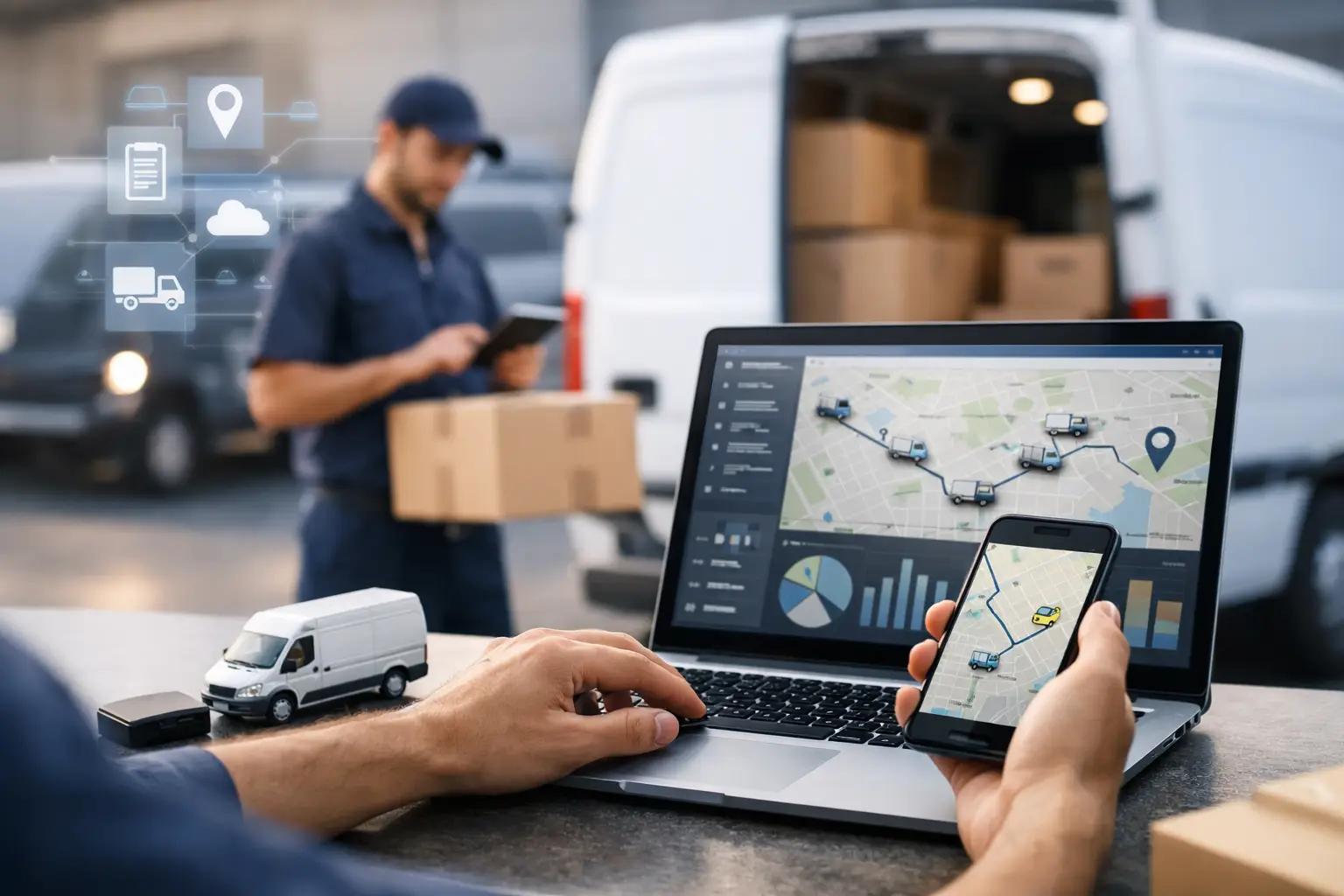
The second critical issue is live tracking and reporting. A business that cannot see the difference between the planned route and the actual route cannot see opportunities for improvement. The software should tell you not only where you are, but also why the deviation occurred.
The third issue is scalability. A company managing 15 vehicles today may expand to 50 vehicles in six months. The same system is adapted to new regions, new user roles, and new operating rules.If it doesn't provide the desired results, reinvestment will be needed quickly.
The most frequently asked question by decision-makers is how long it will take for the software to pay for itself. This calculation is not done solely by looking at the license cost. The main evaluation should be based on operational gains.
Reduction in fuel consumption is one of the most visible effects, but it is not the only metric. Daily delivery count per vehicle, on-time delivery rate, idle mileage, planning time, customer complaint rate, and call center load should be monitored together. In most businesses, the real contribution of the software is revealed in the cumulative effect of these metrics.
To be honest, not every operation provides the same level of gain. Businesses with already strong field discipline, stable delivery points, and low volume operations may have more limited benefits. Conversely, the impact is much higher in structures with multiple vehicles, high order flow, and frequent route changes.
Many companies believe that purchasing the software is the entire transformation. However, the real results are seen after installation. Even the best software won't deliver the expected results if the quality of address data is poor, delivery rules aren't clearly defined, and the field team isn't prepared for the new way of working.
For successful implementation, operational rules must first be clarified. The answers to questions such as which order is prioritized, which vehicle can carry which load, how delivery time windows will be managed, and who will approve field exceptions, must be incorporated into the system design.
Then, a pilot run is more effective. Instead of transforming the entire fleet at once, starting testing on a specific region, team, or delivery type reduces risks. User feedback is critical at this stage. Because a process that looks correct on the planning screen may create unnecessary clicks or delays in the field.
Route planning isn't just a map problem; it's actually a visibility problem. The clearer the operations manager sees what's happening, the more accurate decisions they can make. Therefore, route optimization software should be considered in conjunction with tracking, notifications, reporting, and mobile field experience.
The driver taking on tasks, providing status updates, sharing delivery proofs via a mobile application, and the center monitoring this in real-time ensures that the operation is no longer a closed box. As transparency increases, both team management becomes easier and customer trust rises.
At this point, the approach of platforms focusing on delivery and logistics operations, such as Sentigo, stands out. Because the need is not just to calculate routes, but to manage courier, fleet, mobile application, live tracking, and integration layers within a single structure.
Speed is valuable in logistics, but without control, speed is not sustainable. Today, many businesses struggle not because they lack sufficient vehicles, but because they cannot use their existing capacity in a visible and planned way. Route optimization software changes this picture. It provides less uncertainty, shorter planning times, and more measurable field performance.
When making a decision, it is necessary to focus on this question: Does this system only generate routes, or does it make the operation manageable? When a structure that strongly answers the second question is established, delivery processes run more smoothly, customer expectations are met more controllably, and growth is based on a foundation that the operation can sustain.
Companies that make a difference in operations build systems that work more accurately, not just more employees. Making route planning software-supported and data-driven is one of the most concrete steps in this transformation.
This content has been prepared by the Sentigo Editorial Board.