 English
 Turkish
 05 MAYIS 2026


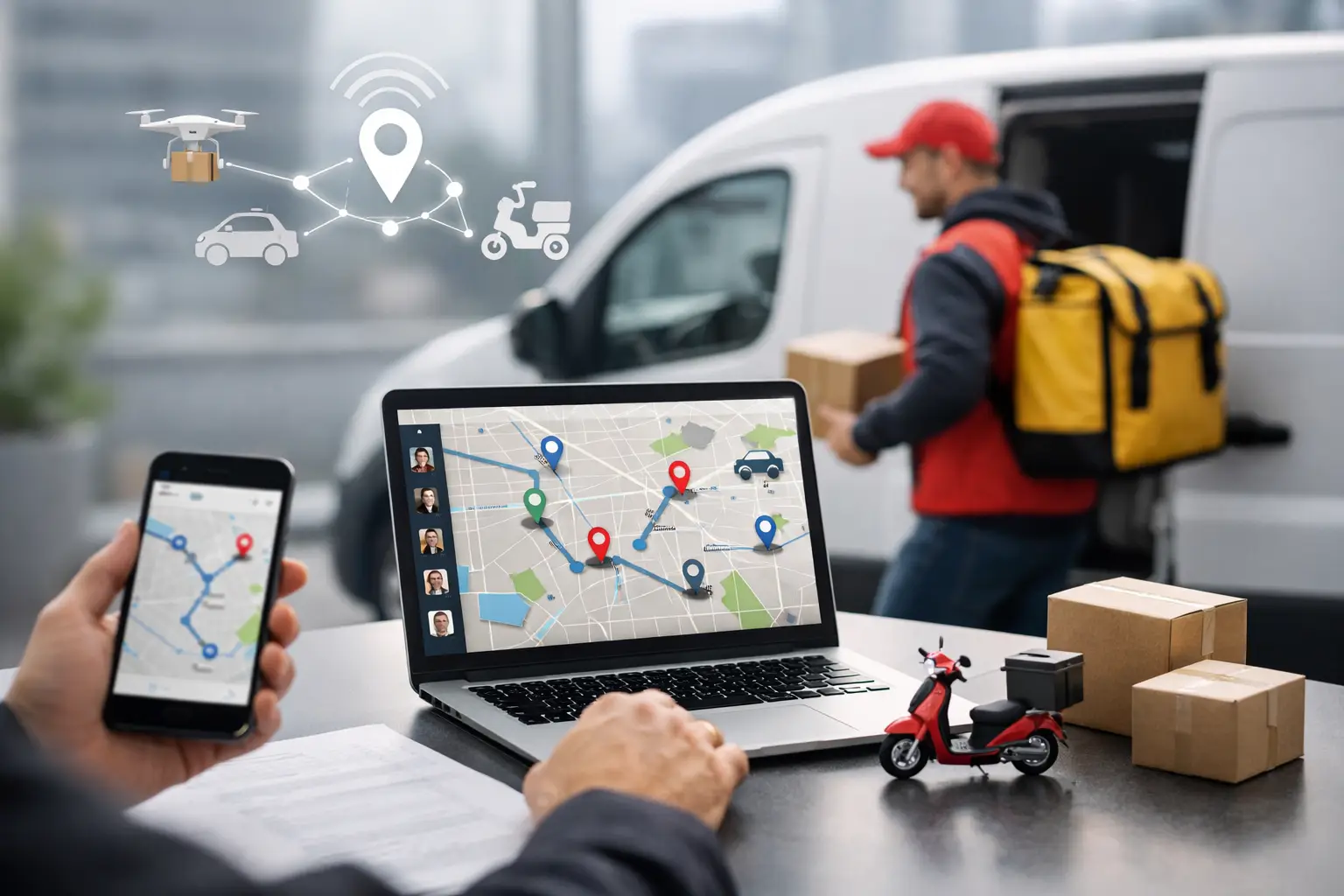
When order volume increases, the problem usually doesn't start with the number of couriers, but with how assignment decisions are made. Especially in multi-branch structures, during peak hours of intense instantaneous order flow, an automated courier assignment system becomes one of the fundamental structures that maintain the rhythm of operations. Because it's not just about choosing the nearest courier. It's about managing delivery time, courier efficiency, and customer experience all together by assigning the right courier to the right job at the right time.
The manual assignment model initially provides a sense of control. The operations manager looks at the screen, considers who is available, and assigns the task. However, as the number of orders increases, this method slows down, becomes dependent on the individual, and cannot properly evaluate dozens of variables simultaneously.
The fundamental problem here isn't just speed. Manual decisions are often non-standard. Under the same conditions, two different operators may make two different courier choices. As a result, delivery times fluctuate, some couriers become overloaded while others are underutilized, and the estimated times given to the customer become inconsistent.
An automated courier assignment system, at this point, moves the operation from personal experience to a rule-based structure. Variables such as courier location, delivery area, capacity, vehicle type, traffic density, order priority, and target service time are evaluated together. This allows for faster, more traceable, and more scalable decision-making.
The basic logic is simple. When a new order arrives, the system scans the available courier pool and makes the most accurate match according to predefined rules. However, an efficient system in the field goes beyond this simple logic.
For example, assigning based solely on distance is insufficient for most businesses. The courier's current status on the route, the number of active deliveries they have, the estimated arrival time, and the order's SLA target must all be considered simultaneously. A cold chain delivery order and a standard package delivery are not managed with the same rules. Similarly, the suitability criteria for motorcycle couriers and vehicle-based delivery teams are different.
In advanced systems, this decision-making engine operates in real-time. The assignment logic can be updated when a new order arrives or field conditions change. This flexibility is especially important during peak hours. Because a good system doesn't just make assignments; it also manages variability within the operation.
The best-performing setup in the field is one that doesn't rely on a single criterion. Typically, the following data are used together: courier location, delivery area, active workload, delivery type, vehicle availability, route density, priority order level, and planned service time.
The important point here is that the correct assignment logic is different for each business. A brand that focuses on fast delivery and a structure that uses planned distribution won't get the same results from the same algorithm. Therefore, the customizability of the system is a critical advantage.
Automatic assignment is often evaluated under the heading of speed. However, the real gain is the balancing effect seen throughout the entire operation. When orders are distributed more consistently, the field workload is balanced. This improves delivery times and makes the performance pressure per courier more manageable.
The second important benefit is visibility. Questions such as which order was assigned to which courier and why, which rule was activated, and which area experienced a bottleneck can be answered through the system. This visibility is valuable not only for daily management but also for operational improvement decisions.
The third benefit emerges on the cost side. When unnecessary route extensions, unbalanced workloads, and incorrect assignments are reduced, the unit delivery cost becomes more controllable. Especially in high-volume operations, small optimizations have a significant impact on total cost.
No. An automated courier assignment system offers a strong structure, but it doesn't work miracles on its own. If delivery zones are not correctly defined, courier statuses are not up-to-date, or order data is delayed, the system can also make incorrect decisions. Automation working with poor data only produces errors faster.
Therefore, in successful implementations, the operational design is clarified first. Service areas, delivery time targets, courier types, density scenarios, and exception rules are defined. Technology supports the process here, it doesn't replace it. Even the best software has limited impact without a solid operational framework.
Actual field operations don't always flow in a standard way. The courier might go offline, traffic might unexpectedly increase, the customer's address might change, or the order priority might increase later. Therefore, the system needs to offer not only automatic assignment but also support for reassignment and manual intervention when necessary.
The right approach for decision-makers is this: Automation shouldn't reduce control, it should enhance control.It should be more traceable and faster. The operations team should be able to intervene when necessary, but the majority of the daily workflow should be reliably managed by the system.
Many courier management solutions on the market claim to offer assignment features. However, simply asking "is there automatic assignment?" is not enough when making a decision. The real question is how flexible, how real-time, and how integrated this feature is.
The first thing to look at is the rule engine. How well can the business integrate its own operational logic into the system? Can different assignment scenarios be defined based on region, time, vehicle type, or customer priority? Can standard packages and special deliveries be managed on the same screen?
The second issue is integration. The order source can be an e-commerce infrastructure, ERP, call center, or store system. If data is delayed, assignment quality decreases. Therefore, a strong API infrastructure and real-time data flow are directly part of system performance.
The third issue is reporting. The system should not only perform assignments but also be able to measure assignment quality. When metrics like average assignment time, reassignment rate, active workload per courier, regional density, and SLA compliance are not visible, areas for improvement remain unclear.
Many businesses initially manage with manual methods. The problem usually becomes apparent when growth begins. Expanding into new regions, campaign periods, multiple warehouse structures, or increased delivery expectations strain the existing system. When the manually managed assignment model cannot handle this pressure, operational quality begins to decline.
Automated assignment, on the other hand, allows for more controlled management of growth. New rules can be added, different cities or different delivery types can be defined on a single platform. Thus, instead of changing processes when volume increases, the business expands the existing structure. This difference is critical, especially for teams managing operations at enterprise scale.
This is where the real value emerges in platforms focused on delivery technologies, such as Sentigo. When courier management, route planning, live tracking, and integration infrastructure work together as part of the same operational chain, automated assignment produces real performance.
In retail, e-commerce, grocery, food, pharmacy delivery, and technical service operations where high expectations for fast delivery are high, this system directly demonstrates its impact. However, its value is not limited to businesses that offer instant delivery. For cargo, logistics, and field service teams that perform planned deliveries, automated assignment creates a significant area of efficiency.
Here, the determining factor is not the sector name, but the complexity of the operation. If order volume is variable, field teams have different capacities, and delivery performance affects commercial results, the return on investment for automated assignment is clearer.
The question, "Should we implement this system?" is often a question asked too late. A more accurate question is: Does our current assignment model truly support growth, speed targets, and operational transparency?
If delivery delays are managed with person-based solutions, if field workload is not evenly distributed, and if performance data doesn't generate decisions, the problem is usually in the system design, not the field team. At this point, an automated courier assignment system is not just a technological feature, but a tool for operational standardization.
When properly implemented, it does enable faster assignment, yes. But more importantly, it transforms the company's delivery decisions into a measurable, repeatable, and improvable structure. And that's where the real gain begins. Because sustainable success in delivery operations comes not from making quick decisions, but from consistently making the right decisions.
This content has been prepared by the Sentigo Editorial Board.